Introduction
When skin feels dry and tired at the end of winter, we tend to reach for something gentle. For many people, that’s milk and honey lotion. It sounds comforting, and for good reason. The mix of milk proteins and honey extracts can help soften skin without feeling too heavy or greasy. This kind of lotion has grown popular during the transition from winter into spring, when cracked hands and tight legs start to quiet down but still need support.
But as much as we like it, we’ve learned it has its limits too. It can help ease dry skin, yes, but it doesn’t fix everything. And that’s okay. This kind of lotion isn’t meant to solve every skin issue on its own. Here, we’re sharing what milk and honey lotion tends to do well and when it might fall short, especially during late winter weeks when skin can’t quite decide how it feels.
What Milk and Honey Lotion Helps With
There’s a reason people reach for milk and honey lotion when the weather has been cold for months. The ingredients, when kept simple, can help calm that tight, itchy feeling that often shows up on arms, legs, and backs.
- Milk helps soften and smooth skin. Some versions use cow’s milk, others use goat or oat milk.
- Honey pulls in moisture and leaves behind a light, smooth finish without that waxy feeling.
- The combination offers hydration without being too rich for everyday use.
Late February and early March can be tricky. The air starts to shift, but heaters are still running, and the skin may feel caught in between. Milk and honey lotion works well in that middle zone. It’s light enough to use morning and night, but still offers more comfort than summer lotions or sprays. We’ve found it helpful on spots that aren’t cracked but feel rough or dull, especially after a long, hot shower.
For people with generally steady skin, it can be a go-to option through this seasonal shift. A few dabs after bathing can be enough to get through dry mornings and breezy afternoons, especially when mixed with other gentle habits like staying hydrated or wearing breathable layers.
Where It Might Not Be Enough on Its Own
Even a good lotion has limits, and we think it’s worth saying that up front. If your skin is seriously irritated, peeling, or deeply cracked (think heels, knuckles, or over-washed hands), milk and honey lotion might not be strong enough by itself to bring relief.
This type of lotion is more about comfort than repair. It can be a nice second step, but not always the first. In cases like these, using something richer or more targeted underneath, then layering a milk and honey lotion over top, tends to work better.
We also suggest paying close attention to how your skin feels as the weeks go on. Just because something worked in January doesn’t mean it will in March. If the lotion feels like it disappears too quickly or doesn’t keep up through the day, it might be time to switch it up or add a second product into the mix. One size never fits all when it comes to skin care, and small adjustments often go further than starting over.
When and How to Use It for Best Results
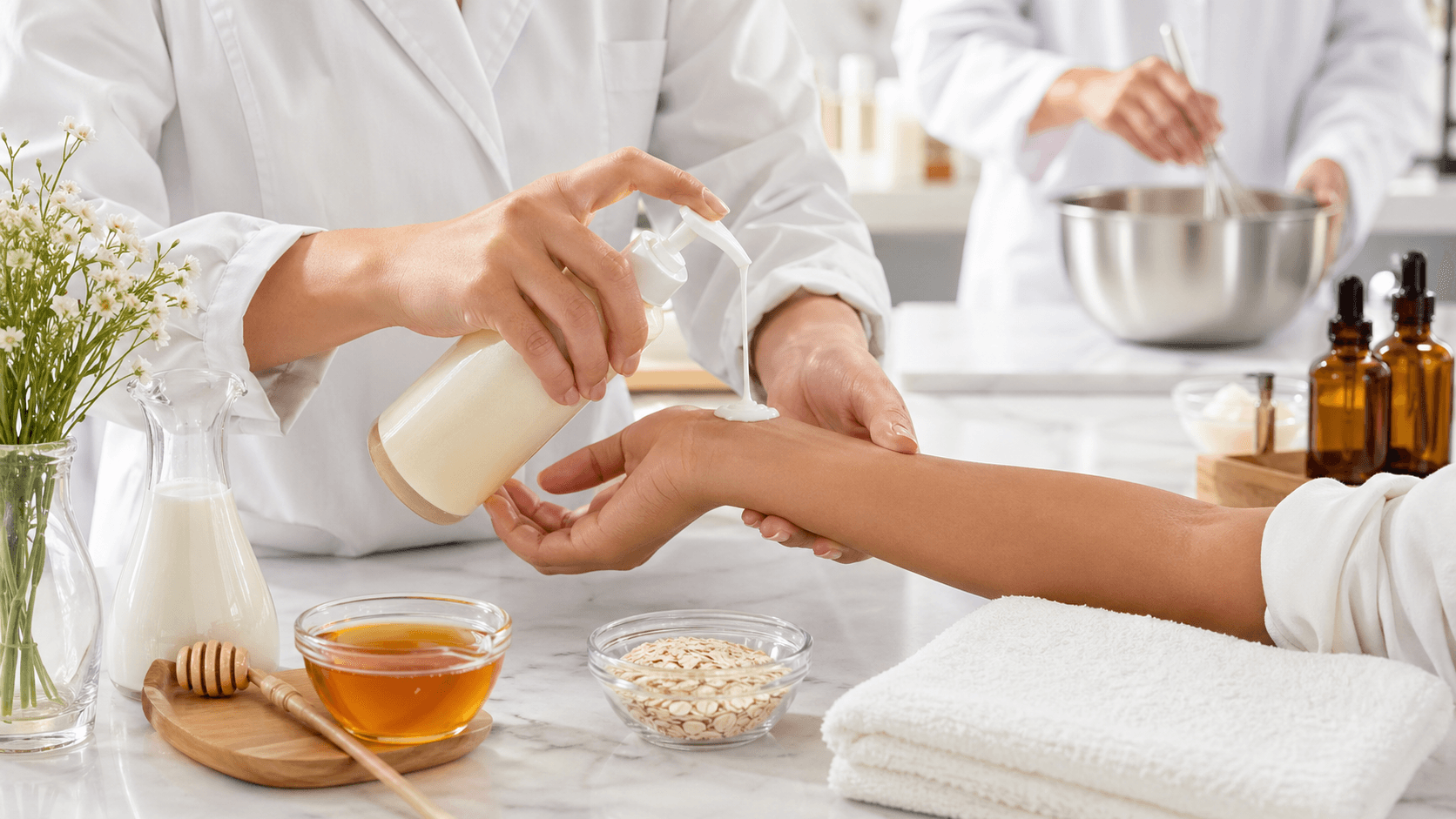
Timing makes a big difference. In our experience, milk and honey lotion sinks in easiest when skin is clean and just a little damp. After stepping out of a bath or shower, water is still sitting on the skin’s surface. That’s our window. Adding lotion then helps keep that moisture in before it disappears into the air.
We’ve also noticed that being consistent matters more than using a heavy hand. A little each day works better than a thick layer once a week. Getting into the habit of applying after showering or before bed helps create a rhythm that skin can settle into.
Spring starts showing signs in early March, but the temperature and humidity may not follow right away. Skin can still get confused, cold mornings, warm afternoons, dry winds. Staying consistent with our lotion routine through these ups and downs gives skin a better chance to catch up and feel balanced again.
What to Look for on the Ingredient List
Not all lotions labeled as milk and honey are created the same. Some include real, skin-friendly ingredients, while others lean more on fragrance or filler. If our goal is to help dry, sensitive skin near the end of winter, there are a few things we try to watch for.
- Choose options with fewer synthetic fragrances or dyes
- Look for forms of milk that feel good on your skin (e.g., goat milk, oat milk, coconut milk)
- Find honey as an actual ingredient, not just the scent
We tend to stick with lotion that keeps things simple. Fewer fillers means there's less chance of irritation, especially when skin is already feeling tired. Reading the ingredient list, something that only takes a second, can sometimes keep us from making skin feel worse by accident.
When in doubt, we try a small patch first. If there’s any stinging or redness, it's a sign to hold off and recheck the ingredients. If it feels smooth and calm from the start, chances are we’re heading in the right direction.
Skin That Feels Ready for Spring
As winter fades and spring starts to bring hints of warmer days, our skin begins catching up with the season. Milk and honey lotion can play a helpful role in that transition, especially when we’re aiming for something gentle, soothed, and easy to use. It brings light hydration, can calm mild dryness, and fits nicely into routines without weighing anything down.
It’s not a fix-all. For deeper repair or ongoing issues, it may need to be part of a fuller routine or combined with thicker products. But when used thoughtfully, and at the right time, it can help carry our skin from these last cold days into the first days of spring feeling a little more steady. A quiet, steady habit, this is how we keep up with the way skin shifts month to month. Sometimes, that’s all it needs.
As the seasons shift, keeping your skin calm and hydrated can be simple with gentle daily care. We’ve found that a light layer of something like milk and honey lotion helps smooth rough patches and supports sensitive skin without feeling heavy. At Hazelwood Soap Co., we believe small changes like this can make all the difference in your routine as the weather warms up. If you have questions or need help choosing what’s best for your skin, we’re here to help.