Introduction
A lot of families turn to an essential oils steamer to help kids sleep better, soothe winter stuffiness, or wind down before bed. When the air feels dry and cold, adding some gentle moisture can bring extra comfort. But it’s normal to stop and wonder if using something like this in a child’s bedroom is truly a safe choice.
We often get that question during winter, especially when colds and restlessness seem more common. Parents want to do what’s best but don’t always know how different products interact with kids, especially during sleep. That’s why it helps to break things down, talk through what’s safe, and share simple ways to keep bedtime soothing without guesswork.
Understanding How Steamers Work
An essential oils steamer works by warming a mix of water and a small amount of oil. As the water turns into steam, it carries tiny droplets of oil into the air. This creates a light mist that can be breathed in or simply noticed in the room through its gentle scent. It’s not the same as burning a candle or spraying something into the air.
These steamers are a bit different from humidifiers or diffusers. Unlike a diffuser, which may spray cool mist or agitate oils in other ways, a steamer uses heat to create vapor. And unlike a plain humidifier, it carries scent or plant oils with the moisture. That added scent or ingredient is where the extra care comes in around kids.
During winter, steam can feel extra helpful. The air dries out quickly indoors, and a little moisture can make breathing more comfortable. A soft scent may calm bedtime, but the warmer mist will also lift the humidity a bit. Both are reasons some families consider using one during cold nights or naps.
What Parents Should Know About Using Them Around Kids
When using anything with children, it’s good to know what to watch for and what choices may be safer. Even natural options can be too strong for small bodies unless used carefully.
- Steamers can get hot. Keep cords out of reach and place the machine where a child can’t knock it over.
- Concentrated oils can irritate breathing or skin. Always use very small amounts, and never allow kids to handle the oils directly.
- Be sure the lid on the water tank is tight so it doesn’t spill or release steam where it shouldn’t.
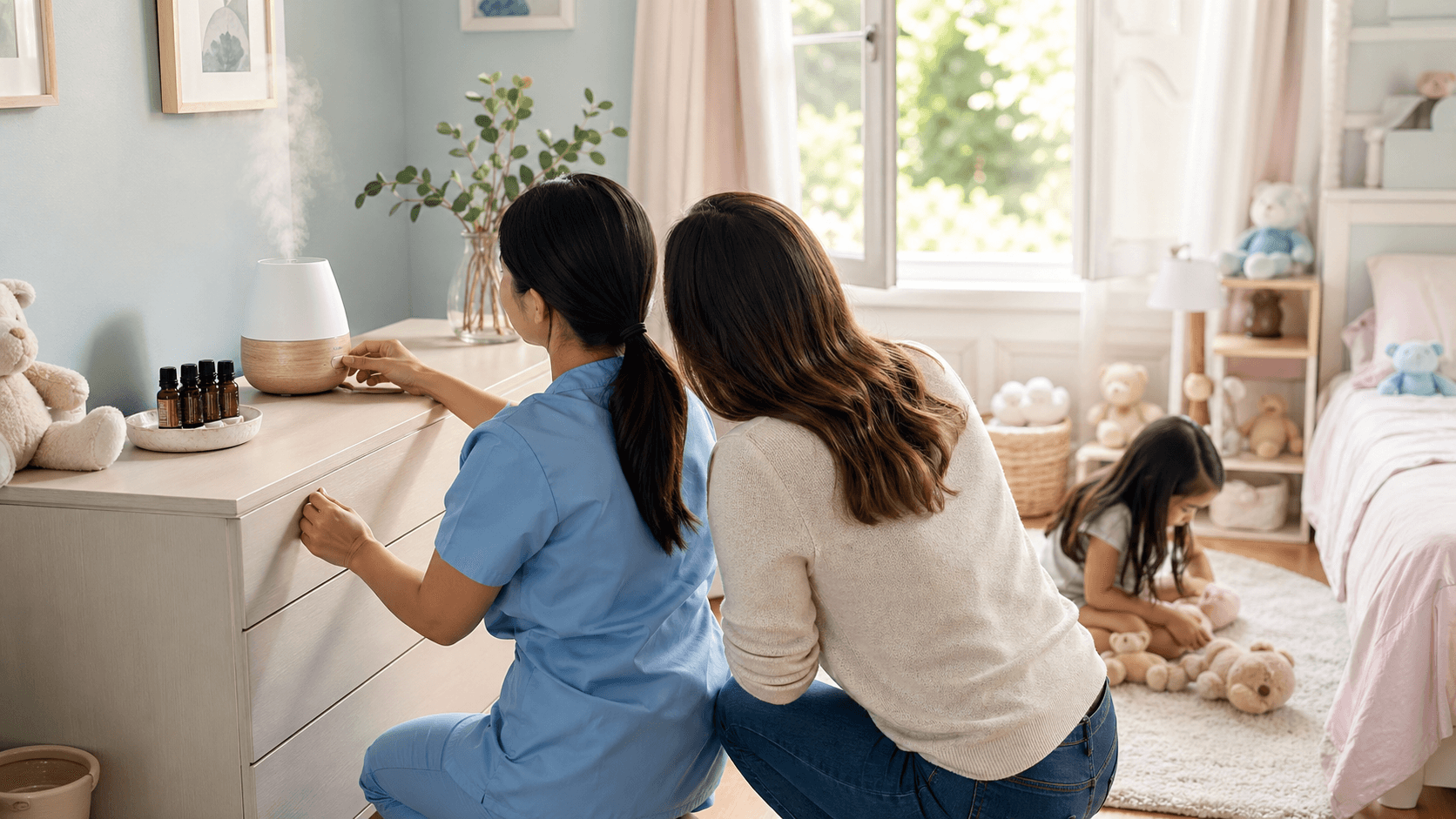
- Instead of putting the steamer right by the bed, place it farther away so the mist spreads more gently through the room.
It’s not just about the machine but how and where it is used. Kids are sensitive to scents, and their airways are smaller, so it's best to go slow and soften the impact.
Choosing the Right Oils for a Child’s Bedroom
Picking what goes into the steamer matters just as much as how it is used. Some oils are too strong for kids, even if they seem gentle to adults. Others may help bring a calm feeling without overwhelming the room.
Here are a few softer oil options that are often used around young children:
- Lavender
- Roman chamomile
- Sweet orange
- Cedarwood (in small amounts)
Always start with one drop and give it time to settle before deciding if more is needed. Too much scent can backfire and keep kids more alert than sleepy.
We stay away from oils that are too stimulating or harsh. This usually means avoiding:
- Peppermint
- Eucalyptus (especially for young children)
- Tea tree
- Rosemary
Some of those may be fine for adults or older teens but can be too strong for small kids. And for infants or toddlers, it’s best to stick with very gentle, low-scent options or skip steaming altogether.
Safer Options for a Calm and Comfortable Room
If using a steamer doesn’t feel like the right fit, there are still other ways to create soothing bedtime routines, especially in dry or chilly months.
- A warm bath before bed can help with relaxation while softening the skin
- Diluted oils can be used in a gentle massage on the back or feet for a subtle scent, without anything going in the air
- Opening the door for a short while after running a warm shower may add temporary humidity without the need for a machine
- A favorite blanket, darker lighting, or soft music can often help signal bedtime better than scent
These kinds of routines are often more comforting when they match what the child already knows. The goal is to make their room feel calm and familiar, not overloaded or new in every direction.
Some children respond best to routines that feel predictable and consistent. Adding too many new elements at once can cause stress, so it's usually more effective to introduce only one or two gentle changes at a time. Parents may want to try a combination of approaches across several nights and then adjust based on their child’s reactions.
There are many simple ways to bring a feeling of calm to a child's space, particularly when the weather outside is cold and dry. Simple acts like adjusting lighting, offering a soft story at bedtime, or keeping favorite toys close can make a big difference in helping little ones settle.
When to Ask for Professional Support
Every child is different. What feels fine in one room might cause congestion or trouble sleeping in another. That’s why we always watch closely to see how kids respond after adding something like a steamer.
Some signs to take seriously:
- More coughing or sneezing once the machine is on
- Itchy skin, red eyes, or restlessness after bedtime
- A room that starts to feel stuffy or overwhelming
If there’s any doubt, it’s worth checking in with a healthcare provider. Whether it’s a pediatrician or someone familiar with family wellness, they can help decide what’s safe and what might do more harm than good.
It’s just one step further in protecting little bodies that are still growing and figuring things out. What works for one child may not sit well with another, and it’s okay to skip trendy tools if they bring more stress than relief.
Sometimes, gentle observation is key. Keeping track of how children sleep, their breathing, or even their mood can offer insight into whether a steamer or specific oil is beneficial for them.
If your child shows any immediate signs of discomfort, such as a sudden rash, difficulty breathing, or persistent coughing after the steamer is in use, it is best to discontinue its use without delay and seek the advice of a medical professional. Children's bodies are always changing, and responses can shift as they grow.
Keeping Comfort and Care in Balance
Adding an essential oils steamer to a child’s bedroom may seem like a simple step, but small things can have big effects. Used carefully, it might help the air feel less dry or nudge a bedtime mood toward calm. But it only makes sense if we take time to learn what helps and what might be too much.
We believe comfort and safety go hand in hand. Season by season, we all try to create spaces that feel good to be in. Not every tool will be the right one for every home. But with a little thought and a light hand, it’s easier to build routines that help kids rest and breathe better through the winter.
At Hazelwood Soap Co., we understand how important it is to keep your child’s bedtime routine calm and comforting, especially during the winter months. Parents looking for gentle ways to support relaxation often turn to tools like an essential oils steamer to create a cozy atmosphere. Whether you’re trying to ease stuffy noses or settle restless sleepers, a little care goes a long way. We’re here to help you find body and bath tools that make sense for your family. If you have questions or need help choosing what fits best, contact us.