Introduction
Winter air can be rough on skin. It gets dry, tight, and sometimes itchy, especially when cold air outside mixes with heat running indoors. A bar soap company that works with natural ingredients knows these seasonal shifts matter, so we put extra care into how we make products for colder months. What you use on your skin in summer might not hold up once winter sets in.
We think a few gentle changes go a long way. Whether it's adding extra moisture, skipping strong scents, or using ingredients that feel cozier, the goal stays the same, helping skin stay calm and comfortable when the weather isn't. Here’s how we make decisions in winter that help the season feel a little softer for skin.
How Cold Weather Affects Skin and Daily Routines
Cold air holds less moisture. When temperatures drop, wind and dry conditions outside can strip water from the skin quickly. Inside, heaters keep us warm, but they pull even more moisture out of the air, leaving our skin to fend for itself.
This dryness can show up in different ways. For some, it's a tight feeling around the eyes or mouth. Others notice flaky patches or redness along the cheeks and neck. More than any other time of year, skin needs extra help holding onto whatever moisture it can.
- Winter skin loses surface hydration faster than in warm weather
- Dry patches often form on areas most exposed to the air, like hands and face
- Daily habits like showers or hand washing can make things worse if the products are too harsh
That is why we shift both ingredients and techniques around this time. Every bar of soap has to not only clean but also give something back to the skin.
Choosing Ingredients That Match the Season
When everything outside feels cold and dry, the ingredients inside a bar of soap start to matter more. We think a lot about what goes in, what stays out, and how those choices affect the skin after each use.
Winter-friendly recipes often include:
- Natural butters like shea or cocoa for rich, lasting moisture
- Oils like olive, avocado, or almond that help seal in hydration
- Softer essential oils or unscented options, especially for sensitive users
Just as important is what we avoid. Strong fragrances, chemical preservatives, or stripping agents make dry skin feel worse or more reactive. We leave those out.
The idea is simple. Keep formulas full of clean, gentle ingredients that comfort skin, not confuse it. When the skin’s natural barrier is respected, it can better protect against the dry winter air.
Adjusting Recipes and Techniques for Winter Skin
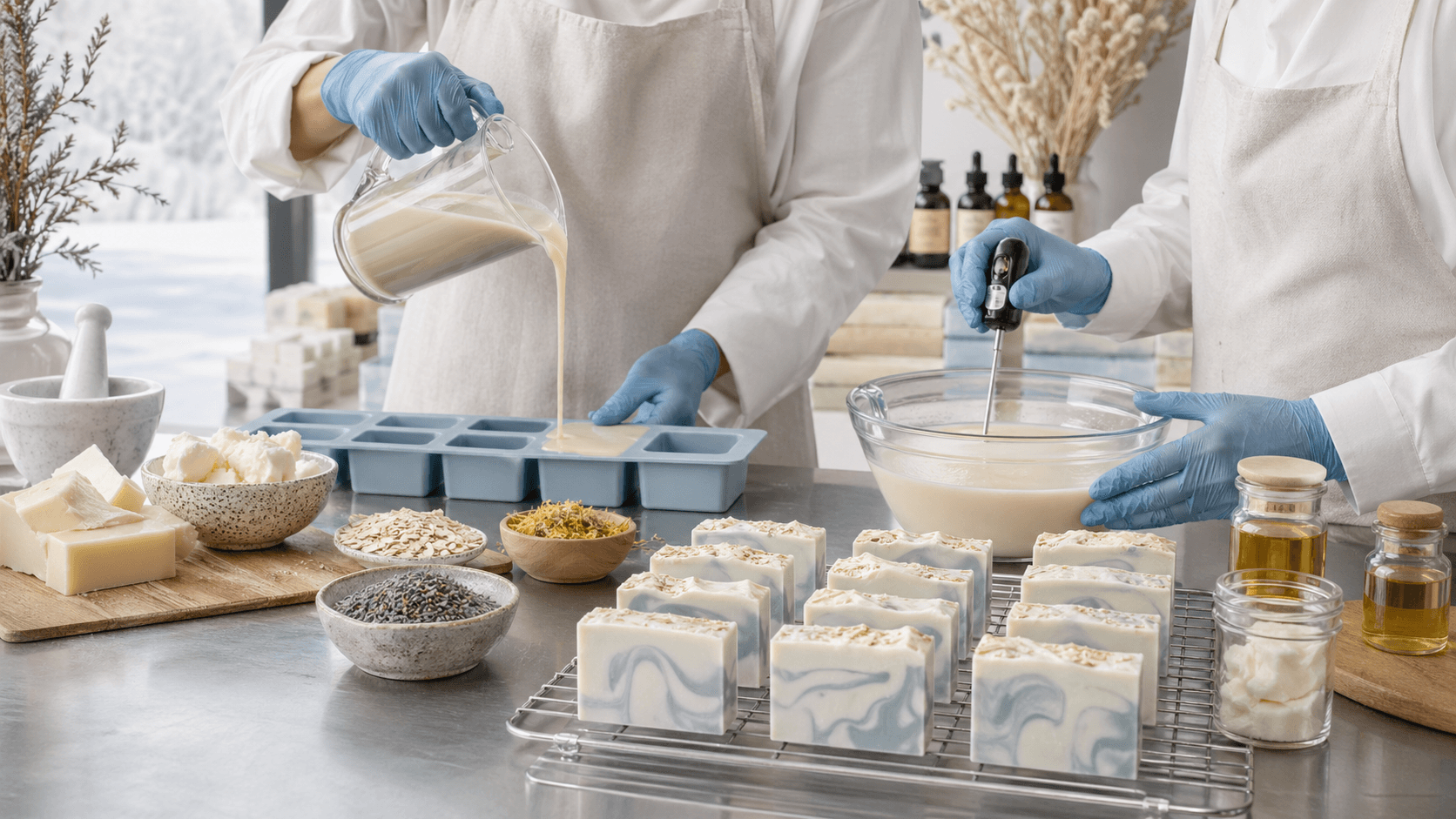
Making soap for cold weather needs more than swapping out a few oils. The way we plan batches this time of year shifts with the season. Small-batch production gives us flexibility to adjust textures, blends, and ratios depending on what skin is dealing with at the moment.
We aim to create lathers that feel soft and creamy, not fluffy or drying. Thicker, slower lathers often deliver better hydration and leave less residue behind, something skin can feel right away.
- We tweak oil blends to hold moisture longer once the bar is used
- Testing lather and rinse-feel during the season helps us adjust gently
- Seasonal planning gives us time to cure soap in ways that bring out richness instead of dryness
These behind-the-scenes changes may sound small, but together they help keep bar soap a good fit through all the winter hand washing and cold-air exposure.
Designing Products That Feel Good in Cold Weather
It’s not just the formula that matters in a bar soap. The way it feels in your hand, smells in the shower, and rinses off all shape whether that bar gets used again. We think about those things more carefully in winter when skin feels extra sensitive.
- Certain textures, like creamy or silky finishes, are more comforting in cold months
- Seasonal scents lean toward warm, calming notes like oatmeal, clove, or sweet citrus
- Gentle exfoliants like ground oats or seed powders can help lift dull skin without scratching
We also think more about how the bar itself looks and feels when you open it. For winter, we keep colors soft, packaging easy to grip, and designs that align with a cozy routine. These touches aren’t just for style, they help the bar feel like something you reach for during chilly mornings or dry evenings.
Supporting Skin Beyond the Bar: Winter Pairing Tips
Soap alone plays an important role, but it is only one part of caring for skin in winter. Building a full routine that matches the season makes a big difference, and we think about how our bars fit naturally into the rest of someone’s daily care.
- Pairing soap with body oils or shea-rich lotions helps lock in moisture
- Winter skin often loves a weekly gentle scrub to remove buildup
- Shorter, not-too-hot showers help stop skin from drying out again after washing
Keeping the routine simple matters just as much as choosing the right products. We lean on balance, not extras. Just a gentle wash, followed by a hydrating product, and letting skin rest somewhere warm often does the trick.
In colder months, comfort comes from small choices that feel right in the moment. We try to offer options that work with that idea instead of against it.
Softness That Lasts All Season
Bar soap might seem like a small thing, but when winter sets in, it quickly becomes part of how people care for their skin each day. We’ve learned that thoughtful changes in scent, texture, and ingredients can make a big difference in how comfortable skin feels after every wash. A bar that lathers in a soft, rich way and rinses clean without drying leaves skin feeling more supported than stripped.
Each season brings new challenges, but winter’s dryness asks us to be extra careful with every step. So we look at how things feel, what they leave behind, and what kind of comfort they offer. That’s how we create bars that people can count on from the first frost to the last chilly day.
At Hazelwood Soap Co., we put care into how our bars feel and function, especially when cold weather makes daily routines tougher on skin. Everything we choose to include, or leave out, is based on years of working in small batches and learning what helps skin stay balanced through the seasons. Curious about how a thoughtful bar soap company makes winter more comfortable? Our soaps are a great place to start, and we’re always here if you have questions or want help choosing what’s right for your skin.